



A beautiful smile within reach!
Regain the full function and aesthetics of your smile and protect your teeth from further damage!
Join our satisfied patients.
Book a consultation today!
Dental crowns are one of the most popular dental solutions for restoring the healthy appearance and functionality of teeth.
They are permanent prosthetic restorations that cover the entire surface of a tooth and are ideal when the natural tooth crown can no longer be rebuilt using composite material.
Made from modern materials such as ceramics or zirconia, crowns are durable, aesthetic, and almost indistinguishable from natural teeth. Their purpose is to recreate the correct shape and colour of the tooth and, if necessary, make slight adjustments to its positioning within the dental arch, restoring a beautiful, natural appearance.
If you are dealing with a damaged, weakened, or discoloured tooth, a dental crown may be the perfect solution. On our website, you will find detailed information about the process of creating and placing crowns, available materials, and how to care for them so you can maintain a healthy smile for years.
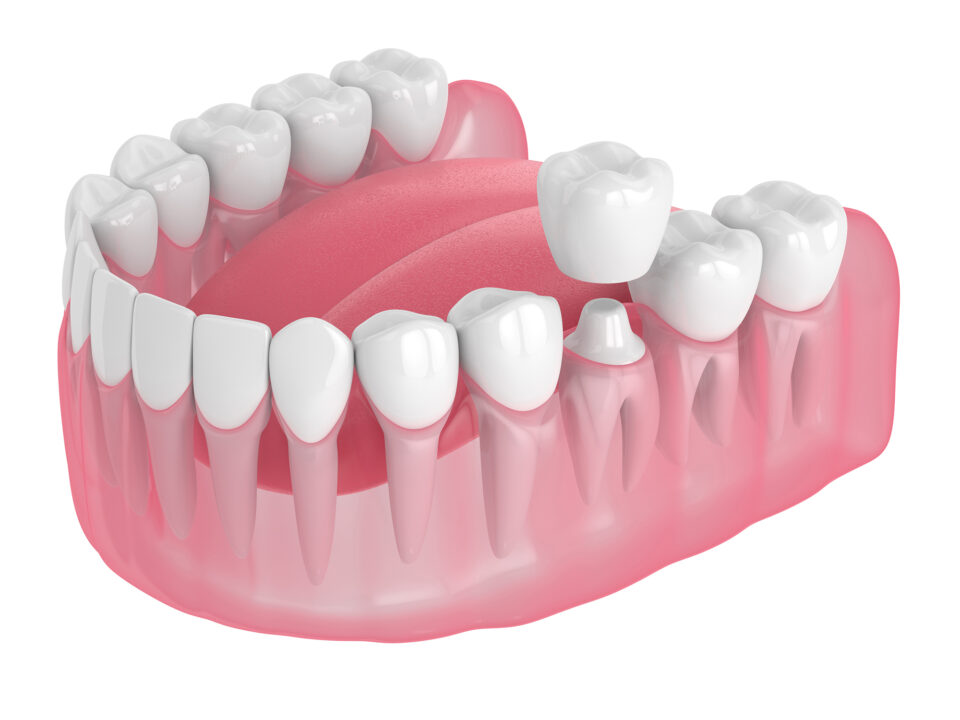
What are dental crowns?
Dental crowns are permanent prosthetic restorations that are placed on completely or partially damaged teeth to rebuild and protect them. A crown covers the entire tooth, restoring its shape, function, and aesthetics. They are most commonly used when a patient’s tooth has become discoloured, broken, or chipped – for example, after prolonged root canal treatment or a history of decay. Dental crowns allow for the reconstruction of damaged tissue that cannot be restored using standard fillings. This type of prosthetic restoration strengthens the tooth, protects it from further damage, and simultaneously restores its natural, healthy appearance.
Types of Prosthetic Crowns:
Depending on the method of fabrication, crowns can be solid (made from a single material) or composite (made from several materials). When considering the material used to make the dental crowns, the following types can be distinguished:
Metal Crowns (Steel or Gold):
An ideal solution for patients who expect durability, functionality, and reliability, especially for molars or premolars.
- Durability and Strength: Metal crowns are one of the most durable prosthetic solutions. Made entirely of metal, they perform excellently in areas subjected to heavy load, such as molars.
- Resistance to Damage: Metal crowns are incredibly durable and resistant to abrasion, cracks, or fractures, making them an ideal choice for people who need a strong and reliable prosthetic restoration.
- Cost-Effective: Metal crowns are one of the most economical options in prosthetics, making them a popular choice for patients seeking a durable and affordable solution.
- Minimal Tooth Reduction: For metal crowns, the need for tooth grinding is smaller than with other types of crowns, preserving more natural tooth tissue.
- Application: Due to their appearance, metal crowns are most often used in the back section of the mouth, where they are not visible when smiling.
- Materials: Metal crowns can be made from various alloys, such as stainless steel, chrome-cobalt alloys, and even gold, which is more biocompatible and aesthetic.
Ceramic Crowns (Porcelain) on a Metal Base:
Recommended for patients looking for durable and aesthetic crowns at a reasonable price. They are also a good choice for people who need a durable prosthetic restoration in areas with high occlusal stress.
- Combination of Durability and Aesthetics: Ceramic crowns fused on a metal base are a popular prosthetic solution that combines the strength of the metal core with the natural appearance of the ceramic exterior. The ceramic covering closely resembles a natural tooth.
- Solid Construction: The metal base ensures exceptional durability and resistance to loads, making these crowns suitable for both anterior and molar teeth.
- Aesthetic Appearance: The porcelain layer mimics the natural tooth, recreating its shape, colour, and translucency. This is particularly important for restorations visible during everyday smiles.
- Versatility of Materials: The metal base of crowns can be made from various alloys, such as stainless steel, chrome-cobalt alloys, or gold, which can further improve aesthetics and biocompatibility.
- Affordable Alternative: Ceramic crowns fused on a metal base are often chosen as a more affordable alternative to all-ceramic crowns, offering aesthetics at a reasonable price.
- Application: These crowns are used both for individual restorations and in larger prosthetic works such as bridges.
Full Ceramic Crowns (Porcelain):
Ideal for individuals who value the highest aesthetic quality, natural appearance, and comfort of use. Particularly recommended for patients with high aesthetic requirements and metal allergies.
- Natural Aesthetics: Full ceramic crowns are one of the most advanced prosthetic solutions, characterised by exceptional aesthetics. Using ceramics that perfectly mimic the natural structure and translucency of teeth so well that they are almost indistinguishable from real teeth.
- Biocompatibility: Full ceramic crowns are completely safe for the body, as they do not contain metal, eliminating the risk of allergies and irritation. They are ideal for patients with sensitivities to metals.
- Exceptional Comfort: The material used for these crowns is smooth and gentle, minimising the risk of gum irritation and providing a natural feeling in the mouth.
- Durability and Strength: Modern ceramic production technologies allow for crowns with high strength, making them suitable for both anterior and molar teeth.
- Precise Fit: Full ceramic crowns are designed individually for each patient, allowing for a perfect recreation of the shape, colour, and translucency of natural teeth.
- Application: These crowns are especially recommended for the aesthetic zone, i.e. the front teeth, where appearance is crucial. Thanks to their durability, they can also be used for molars.
Full Contour Zirconia Crowns:
This solution is an excellent choice for patients looking for crowns that combine exceptional durability with aesthetics, especially for individuals with metal allergies or those requiring an impeccable aesthetic outcome.
- Exceptional Durability and Aesthetics: Full-contour zirconia crowns are a modern prosthetic solution that combines outstanding strength with a natural appearance. Made entirely of zirconia, they restore complete contour of the tooth, achieving an excellent aesthetic effect while ensuring unmatched durability.
- No Metal Core: Unlike traditional crowns with a metal base, full contour zirconia crowns are fully translucent. As a result, the material not only mimics natural teeth well but is also biocompatible, minimising the risk of allergic reactions.
- Resistance to Loads: Zirconia is one of the strongest materials used in prosthetics. These crowns can withstand high chewing forces, making them ideal for demanding cases, including molar restorations. They are resistant to wear, cracks, and mechanical damage.
- Natural Appearance: Zirconia features excellent translucency, which makes these crowns look almost identical to natural teeth. Additionally, this material does not change colour over time, keeping the crown looking aesthetic for many years.
- Precise Fit: Full contour zirconia crowns are meticulously designed and tailored to the individual needs of a patient, ensuring a perfect fit, excellent comfort, and a harmonious appearance.
- Application: Full contour zirconia crowns are recommended for restorations both anterior and posterior teeth. Thanks to their strength, they are an excellent choice for both aesthetic reconstructions and areas requiring high resistance to loads.
Ceramic Crowns (Porcelain) on a Zirconia Base:
Ceramic crowns on a zirconia base are ideal for individuals looking for a combination of aesthetics, durability, and comfort, as well as for patients with metal allergies.
- High Biocompatibility: Both zirconia and porcelain are fully biocompatible materials, meaning they do not cause allergic reactions or irritation to oral tissues. This is an ideal option for patients with sensitivities to metals.
- Natural Appearance: Thanks to their translucency and natural colour, ceramic crowns on a zirconia base perfectly replicate the appearance of natural teeth. These materials blend seamlessly with the remaining teeth, providing a highly aesthetic, long-term solution.
- Exceptional Strength: The zirconia base provides the crown with significant resistance to mechanical stresses, making it a solution particularly recommended for molars and other areas exposed to intense chewing.
- Precise Fit: These crowns are individually designed for each patient, ensuring a perfect fit for the tooth shape, smile aesthetics, and occlusal functionality.
- Longevity: Ceramic crowns on a zirconia base retain their aesthetic properties for many years. They do not change colour or structure, making them a very durable prosthetic solution.
- Application: These crowns are suitable for restoring both anterior and posterior teeth. They provide an excellent solution for patients seeking aesthetic, durable, and functional prosthetic crowns.
Telescope Crowns:
Telescope crowns are an excellent solution for patients needing solid, aesthetic prosthetic restorations, especially when multiple teeth need to be restored within a single arch. They are also ideal for individuals who have trouble with traditional dentures, offering comfort and functionality.
- Advanced Prosthetic Technology: Telescope crowns are specialised prosthetic restorations consisting of two components: an inner crown, precisely fitted to the tooth or implant abutment, and an outer telescope crown that fits over it. Together they create a highly stable and aesthetic restoration.
- High Stability and Durability: Telescope crowns provide exceptional stability because the inner crown is very precisely matched to the shape of the tooth or abutment, and the outer telescope crown, coated with a special composite, serves as a protective cover, stabilizing the entire structure. This solution is extremely durable and resistant to mechanical loads.
- Aesthetics and Functionality: Telescope crowns offer a natural appearance that aligns with the rest of the dentition. Unlike other solutions, the telescope crown not only improves aesthetics but also restores full tooth functionality, especially for patients with missing teeth.
- Application: Telescope crowns are particularly recommended for replacing missing teeth, especially where bridges or implants are not possible. They are used in prosthetic works on natural tooth abutments or implants, where stability is needed while maintaining aesthetics and occlusal function.
How is a dental crown placed?
The process of placing a dental crown consists of several stages:
Advantages of Dental Crowns
- Aesthetics: Porcelain and zirconia crowns have exceptionally natural appearance, making them almost indistinguishable from healthy teeth.
- Tooth Protection: Crowns effectively protect the teeth from further damage and maintain their full functionality.
- Durability: Crowns are durable and resistant to damage, offering long-term protection.
- Function Improvement: Crowns restore the full function of the tooth, enabling proper chewing and biting.
- Biocompatibility: Zirconia or full-ceramic crowns are biocompatible, meaning they do not cause allergic reactions.
Disadvantages of Dental Crowns
- Cost: Porcelain or zirconia dental crowns can be relatively expensive, particularly when multiple teeth need to be restored.
- Time-Consuming: Fabrication requires multiple visits to the dentist, and creating the crown in the laboratory takes a few days.
- Maintenance Required: Crowns, like natural teeth, require regular care and hygiene to prevent decay or gum issues.
- Potential Damage: Porcelain and ceramic crowns, despite their aesthetic appeal, can be prone to chipping or breaking under excessive pressure (e.g. due to bruxism or trauma).
Indications for the use of crowns:
Dental crowns are recommended in the following cases:
- Extensive tooth damage due to decay: Especially when there is insufficient hard tissue left to restore the tooth with a filling.
- Root canal treatment: After root canal therapy, the tooth becomes weakened and requires additional protection.
- Cracks or fractures in teeth: A crown protects the damaged structure, preventing further deterioration.
- Teeth reinforced with a core (e.g. following root canal therapy).
- Teeth with severe discoloration: When whitening does not provide satisfactory results.
Contraindications for the use of crowns:
Dental crowns may not be suitable in the following situations:
- Advanced gum or periodontal disease: This can affect the aesthetic outcome of the crown.
- Insufficient healthy tooth tissue: In such cases, more advanced treatments, like implants, may be necessary.
- Bruxism (teeth grinding): This may lead to crown damage, especially porcelain crowns.
- Allergy to certain materials: For example, sensitivity or allergy to metals may exclude the use of metal-ceramic crowns.
Dental crowns are an effective solution for restoring heavily damaged teeth.
They are used when a tooth is weakened by decay, cracks, or root canal treatment. A crown encases the entire visible part of the tooth, restoring its full functionality, enabling proper chewing and biting. Thanks to the use of modern materials like porcelain or zirconia, crowns look natural and blend seamlessly with the remaining teeth. This is an excellent solution for patients seeking a restoration that provides comfort, functionality, and a natural look.
Contact Us