



X-ray Diagnostics in Dentistry – The Key to Precise Treatment!
Comfort, Safety, and Accuracy!
X-ray Diagnostics in Dentistry – The Key to Precise Treatment!
Book a consultation today!
X-ray diagnostics play a crucial role in dentistry, allowing for an accurate assessment of the teeth, gums, and surrounding bone structures. At our clinic, we offer state-of-the-art X-ray examinations that are not only fast and precise but also completely safe, thanks to minimal radiation exposure.
Why Choose Our X-ray Diagnostic Services?
- Precision and Treatment Effectiveness: X-ray images help detect problems that are invisible to the naked eye, such as cavities, cysts, root fractures, or inflammations around the teeth or maxillary sinuses.
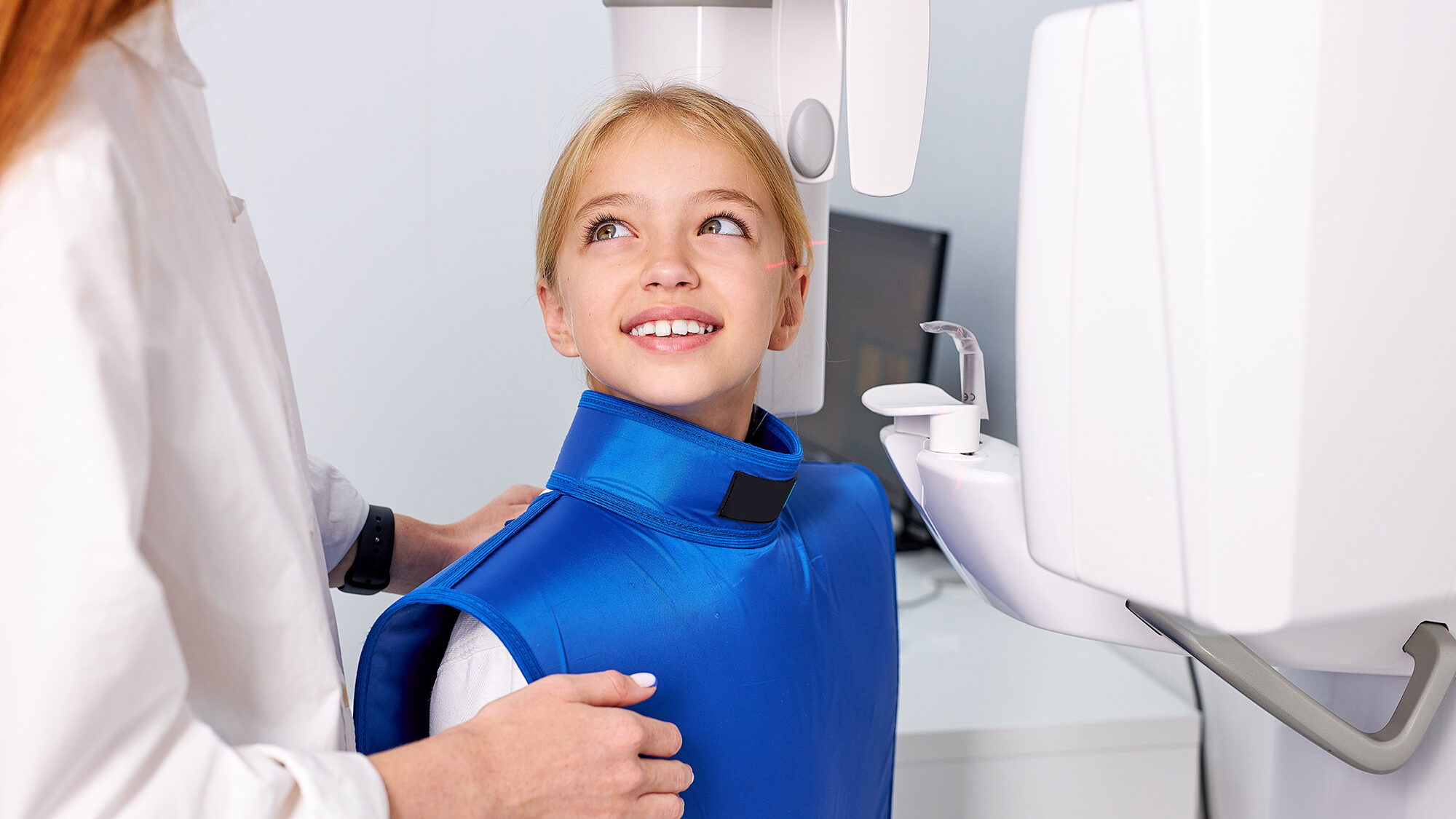
- Patient Safety: Thanks to advanced equipment, we minimise radiation exposure, making the examination safe even for children.
- Comprehensive Diagnostics: We offer a full range of examinations, including targeted – periapical, panoramic X-rays, and 3D computed tomography, ideal for planning implantology, orthodontic, or endodontic treatments.
- Comfort and Time Savings: All diagnostic tests are performed on-site, allowing for a quick diagnosis and treatment planning without the need for additional visits to other facilities.
Choose Modern Diagnostics at Dr. Gajda’s Dental Clinic!
Our clinic is equipped with the latest technology, providing the highest quality diagnostic images. Our experienced specialists carry out a thorough analysis of the images, allowing for precise treatment tailored to each patient’s needs.
Visit our clinic for professional X-ray diagnostics!
This keeps your smile healthy and beautiful for many years to come.
We understand how important your time and comfort are. That’s why, for many years, we have offered our own on-site X-ray diagnostics lab, where we perform all necessary examinations, reducing waiting times and speeding up the entire treatment process.
Our lab is equipped with the latest diagnostic device – the Vatech GREEN 16. This advanced digital imaging system enables both panoramic X-rays and computed tomography. Thanks to this technology, dental diagnostics are exceptionally precise, making treatments more effective and better suited to each patient’s individual needs.
Vatech Green 16 – Modernste Technologie im Dienst der Gesundheit
- Minimal Radiation Dose – Radiation exposure is reduced by up to 90% compared to traditional film-based X-rays.
- Instant Results – The image is available immediately after exposure, significantly reducing waiting time for diagnosis and further treatment.
- Easy Data Access – Digital storage of images allows for convenient comparison and monitoring of treatment progress.
- Precise Diagnostics – The ability to enlarge, rotate, and take accurate measurements of the image ensures even better therapy customization to the patient’s needs.
Take care of your health and comfort – choose comprehensive diagnostics at Dr. Gajda’s clinic!
We guarantee high-quality services, the most advanced equipment, and expert care from our highly qualified staff.
As part of X-ray diagnostics, we offer the possibility to perform:
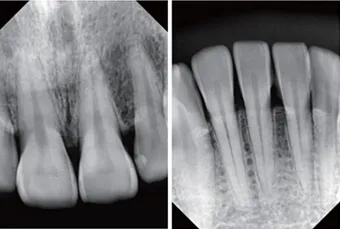
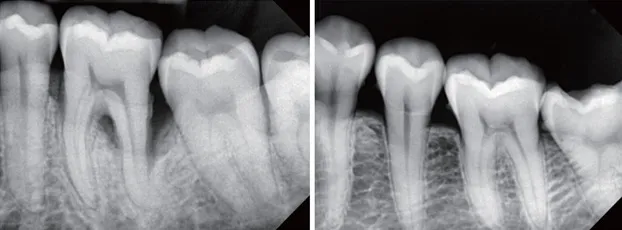
POINT X-RAY (intraoral), provides the most detailed information about the condition of individual teeth. It is highly accuracy and is most frequently taken during root canal treatment, as it allows the assessment of periapical tissues and helps determine the length and exact location of the canals. Thanks to its reproducibility, it is possible to assess the tooth following the final filling and the completion of treatment. The point-of-care radiograph is also used to diagnose inflammation around a single tooth and detect caries. In patients with facial trauma, intraoral radiographs help identify fractures within the crown or root of the tooth.
X-ray of anterior teeth
X-ray of molar teeth
PANTOMOGRAPHIC X-RAY
PANTOMOGRAPHIC X-RAY (also known as panoramic X-ray) is a basic dental imaging examination and is particularly useful for evaluating the condition of the teeth and periodontium. Unlike intraoral X-rays, it allows all the teeth to be visualised, including unerupted and retained teeth, as well as the surrounding structures such as alveolar processes, maxillary sinuses and mandibular branches. The radiation dose during a panoramic X-ray is comparable to that of a single tooth X-ray. Therefore, when planning treatment involving several teeth or preparing for more extensive restorative work, a panoramic X-ray is a much safer and more efficient option than taking multiple images of individual teeth.

What can digital radiovisiography help us with?
- Surgery
Prior to the planned extraction, to visualise the shape of the roots and assess the level of difficulty of the procedure. - Prosthodontics
To assess which teeth need to be extracted and which can be treated so they serve as supports for bridges, crowns and prostheses. - Conservative dentistry
To detect carious lesions on surfaces not visible during a routine examination, to assess the periapical area before and after root canal treatment, and to verify the condition of existing fillings.
- Endodontics
Prior to root canal treatment, to accurately visualise the shape and number of roots, the course of the canals and to assess the periapical area. - Paediatric dentistry
For early diagnosis of dental malformations and to assess the stage of tooth development. - Dental diagnostics
To detect caries and inflammation that may not be visible during a standard examination.
X-ray and CT in dental treatment
3D computed tomography (CT) and digital radiovisiography (intraoral X-ray) play a crucial role in the successful treatment of teeth. The images produced by these modern diagnostic devices are an invaluable aid in dental care.
At our clinic, we use both methods as part of the treatment process, enabling us to provide truly comprehensive care of our patients.
Modern radiology means greater comfort and far more predictable treatment outcomes!
Contact Us